
Palestinian films are sweeping awards and drawing big festival crowds, but you wouldn’t know that from mainstream arts and culture pages
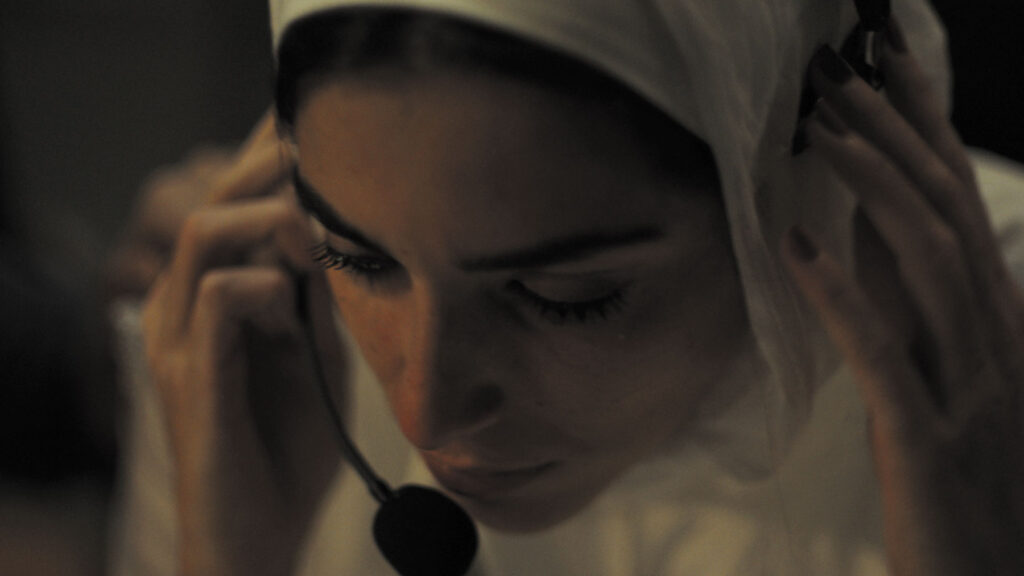
The widescreen in the cinema at TIFF Lightbox illuminated streaks of tears in the eyes of audience members. People clenched their fists and held their heads in their hands as The Voice of Hind Rajab, Kaouther Ben Hania’s docudrama about a six-year-old Palestinian girl killed by Israeli Occupation Forces, played at the Toronto International Film Festival (TIFF) in September 2025.
Zoha Naghar was in the audience that evening and observed how people were reacting around her. She noticed expressions of pain and visceral emotion as she looked around. People of all backgrounds were transfixed as they heard the sound of Hind’s voice pleading for help coming through the speakers.
Naghar, a friend and a recent graduate from Toronto Metropolitan University (TMU), had covered TIFF two times before. Her interest in covering the festival began when several films from South Asia, and films featuring Muslim perspectives were screened in 2022. This year, her eagerness grew as she heard that Palestine-focused were being screened.
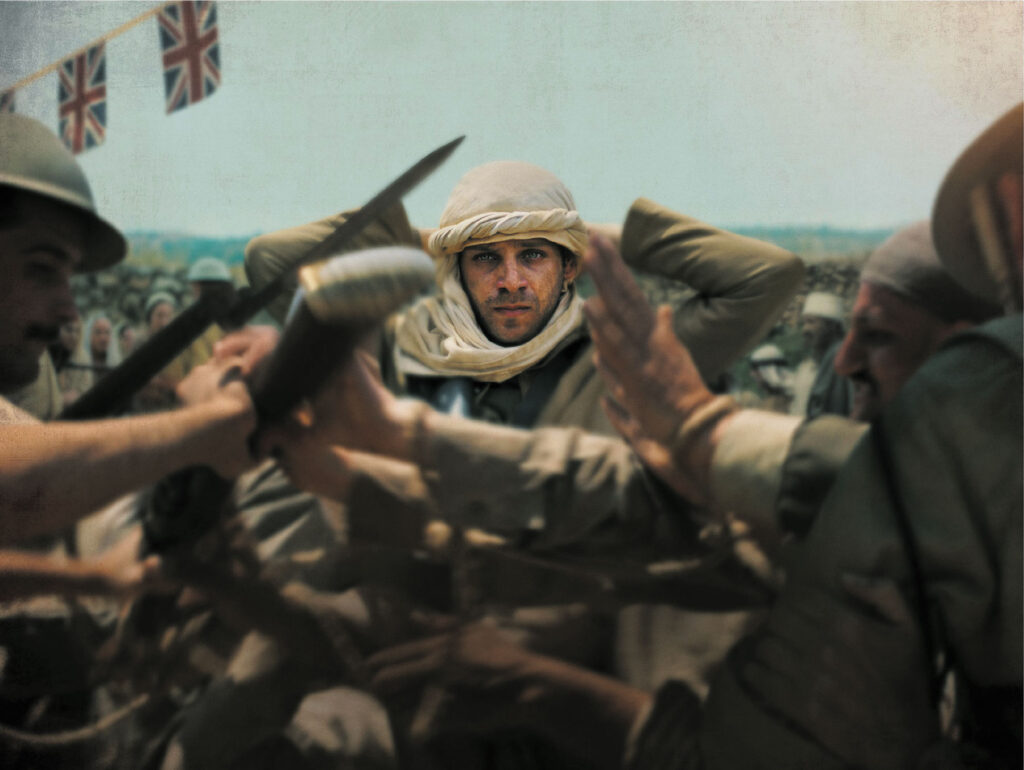
There was more representation of Palestinian films on the program — more than three — compared to previous years. During screenings of these films, social media posts circulated showing actors wearing Palestinian flag pins and keffiyehs draped on their shoulders as they walked the red carpet. The words “stop the genocide” were painted on the hands of an actor in Palestine ’36, a historical drama directed by Annemarie Jacir. Karim Daoud Anaya, the film’s star, held a camera in a plastic bag filled with fake blood — a powerful statement representing the bloodshed happening in Gaza in front of the world.
Alongside The Voice of Hind Rajab and Palestine ’36 were the films Put Your Soul on Your Hand and Walk, With Hasan in Gaza, and That’s So Beautiful. The screenings coincided with the two-year mark of Israel’s ongoing assault on Gaza approached — an assault that has been deemed a genocide by many, including the United Nations Human Rights Council and Amnesty International. And yet, while Palestinian films graced the screens at TIFF, coverage of the films’ impact was seemingly minimal.
“I had a feeling that these Palestinian films wouldn’t be covered if I didn’t take some initiative to do so,” Naghar tells the Review of Journalism, pointing to the lack of historical coverage of Palestinian film in Canadian media. “In previous years, I hadn’t seen that initiative from others, and I felt like it was my duty, as someone who calls herself a journalist, to cover these films.”
Naghar watched Palestine ’36 and Put Your Soul on Your Hand and Walk, and covered The Voice of Hind Rajab for Riadh Magazine, a Toronto-based online publication run by TMU students. “Thankfully, there was a group of people [at Riadh Magazine] who also wanted to [cover] those films.”
As Naghar waited in the rush line — a last-minute opportunity for people without tickets to get into screenings — to attend the premiere of Palestine ’36 for the second time, she talked to those around her and found that there weren’t any other journalists wearing media passes.
“Art has a way of moving people. Art has a way of building empathy. But for some people, you have to shift their view and make them see the connections and make them confront themselves, because a lot of people are not willing to do that.”
Speaking on the environment of media coverage, Naghar finds that journalists tend to step away from reporting on Palestine and the true context around the genocide out of fear that they might lose their jobs. “Any major news article or any major entertainment outlet that you look at will not address it for what it is. And it’s always the smaller outlets that you have to scroll three pages down that are actually telling the truth.”
Naghar says that there is almost a “template” that media outlets use that she feels they’re never going to get out of because of that same fear. “I’ve worked with bigger outlets, and I’m noticing the narrative never changes.” So, she was relieved to be writing for a smaller publication with a commitment to the story and who didn’t change language used.
“I know that my piece for Riadh would have looked so much different if I’d done it for [another outlet],” says Naghar. As for TIFF, they have no restrictions for what a journalist writes. “They don’t interfere,” she adds.
Mainstream outlets tend to stick with a certain framework when it comes to including Palestinian voices or narratives. CBC did cover Palestine ’36. But Nick Logan’s article, while descriptive of the red carpet, focuses more on October 7, 2023 than the film itself. Logan writes, “Other members of the cast and crew held up Palestinian flags and messages reading, ‘Stop the genocide’ at the premiere, which took place exactly 700 days after the October 7, 2023, Hamas-led militant attack on Israel that preceded the ongoing Israeli military assault on Gaza.” The article sidelines the human cost of that “ongoing military assault,” which has included the persecution and killing of Palestinian men, women, and children. The death toll is only mentioned near the very end, while the narrative weight centres the Hamas-led attacks, shaping the story in a way that diminishes the scale and immediacy of Palestinian suffering and the focus of the film itself.
Other legacy media, like the Toronto Star and CityNews featured a Canadian Press article written by Cassidy McMackon, headlined “Palestine ’36 Director at TIFF: ‘Never imagined that I would be here during a genocide.’” The article interviews Jacir on creating this film during a time when her people are facing a genocide.
Other than the syndicated Canadian Press article published in the Star, the Palestine-focused films didn’t pick up further coverage, indicating that the paper didn’t send out journalists to report on them directly.
But what did dominate the headlines was the controversial Israeli documentary, The Road Between Us: The Ultimate Rescue, a film by Canadian filmmaker Barry Avrich, of an Israeli general’s attempt to rescue his family on October 7, 2023. The Star produced 13 articles about the film, some from Canadian Press, one opinion piece, and an interview with the director.
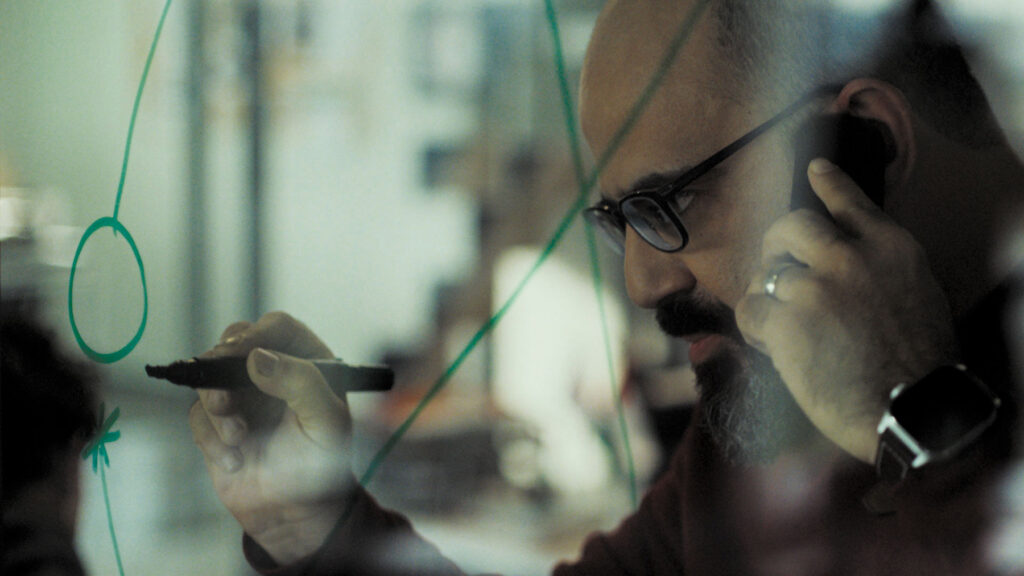
Debates sparked, and social media swarmed the controversy, with many activists and supporters of Palestine feeling that the inclusion of this film was insensitive, as Palestinians have been facing two years of ongoing attacks by the Israeli military.
TIFF initially removed the film from its lineup, stating legal concerns surrounding its use of footage from Hamas. According to the festival, the filmmakers failed to meet the required conditions, including full legal clearance of the footage. However, the documentary was later reinstated after public outcry from politicians and Jewish organizations like The Centre for Israel and Jewish Affairs, which claimed TIFF allowed a “small mob of extremists” to remove the film in what they called a “shameful decision.” Cameron Bailey, the CEO of TIFF, made a statement regarding the situation, writing, “I want to be clear: claims that the film was rejected due to censorship are unequivocally false” and that the film “contributes to the rich tapestry of perspectives in our lineup.”
It wasn’t only the Star that featured several articles about the film, but other media outlets too, including CBC, National Post, Global News, and The National.
Naghar didn’t watch The Road Between Us, but attended the award ceremony. When the film won the People’s Choice Award in the documentary category, Naghar recalls that positive reception of the win was sparse. “No one clapped in the entire row. Everyone was kind of looking at each other. There were a couple of people clapping here and there.”
By contrast, despite Put Your Soul on Your Hand and Walk and Palestine ’36 being sold out twice, neither of these films won any awards at TIFF.
This isn’t the first time TIFF has navigated political tensions. In 2024, in the midst of Russia’s war on Ukraine, TIFF premiered the documentary Russians at War, which received pushback for its insensitivity towards Ukrainian communities and its “art-washing,” a term connotating the utilization of art to justify controversial practices of certain groups or organizations.
In 2022, TIFF published a press release listing all the Ukrainian films premiering at the festival and events surrounding the political climate in Ukraine. They held a spotlight on Ukrainian producers, which highlighted and amplified certain creatives involved in films that year. They also had a discussion panel titled, “The Impact of the War in Ukraine on the International Film Industry.”
This year’s festival featured a similar geopolitical context, yet no comparable spotlights or conversations directly with Palestinian filmmakers were organized. The Review reached out to TIFF for a statement about how they deal with politically charged films and discourse, but did not receive a reply.
Palestine ’36 was presented at TIFF as a Gala Presentation, an honour reserved for the festival’s most anticipated and high-profile films. Gala screenings typically include a red carpet event for the cast, and they are often seen as contenders for receiving prestigious awards such as the Oscars. The Voice of Hind Rajab was also a Special Presentation, another typically high-profile screening where Q&A sessions are held with the audience. All evidence seemingly points to these films to receive the coverage that they were set up for. Indeed, both Palestine ’36 and The Voice of Hind Rajab were submitted to the 98th Academy Awards, with the latter officially nominated for the Academy Award for Best International Feature Film.
Some filmmakers were able to find their own spaces for meaningful conversations despite the festival’s broader lack of attention.
Sepideh Farsi, the director of Put Your Soul on Your Hand and Walk, talked with the Review about her experiences with the media’s response to her film in Canada and in the United States. Farsi is an Iranian filmmaker based in Paris, France, who was in conversation with Fatma Hassona, a Palestinian photojournalist who documented civilian life during the genocide in Gaza. Farsi recorded their calls and exchanges, compiling them into a documentary. The day after the news broke out that their film would be premiering at Cannes Film Festival, Hassona was targeted and killed by an Israeli airstrike on her home, along with 10 of her family members.
Farsi presented Put Your Soul on Your Hand and Walk twice at TIFF and was able to have discussions that were important to her and her film. Her experience, she says, was “generally nice.”
“The thing is that TIFF is so huge that you kind of get lost in a way if you’re not one of those super productions, which I think is oriented a lot towards the American cinema and Hollywood films and a different category of films, more fiction-oriented.” She describes her documentary as more niche.
Farsi presented the film in New York City at the 63rd New York Film Festival in October, 2025. She says the venues were smaller compared to the larger-scale venues at TIFF and had a different atmosphere.
Radheyan Simonpillai, a film critic for CTV’s Your Morning, a pop-culture columnist for CBC Radio, and a contributor to The Guardian, sees a clear contrast between Canadian outlets and others. Simonpillai spoke with the Review about his experiences as a film critic and journalist who has written for legacy media, and is vocal in their support for Palestine.
Last year, he wrote the article “In Andor, the Real World Political Parallels are Impossible to Ignore” for the Guardian about how Disney’s Andor television series reflected current world issues, specifically the genocide in Palestine. He initially pitched the article to a Canadian publication but was politely denied. “They were afraid of me going there,” says Simonpillai.
“When I write for the Guardian, I have a certain freedom,” Simonpillai says. This goes back years for him. Including when he wrote about Palestine prior to this genocide, when he talked about the Sheikh Jarrah bombings in East Jerusalem. “You won’t experience that anywhere else.”
“I would argue that within the Canadian mainstream media landscape, there seems to be a very narrow lane of what is acceptable to talk about or to write about when it comes to Palestine.”
That isn’t to say that international journalism is the epitome of perfect reporting. There are outlets that would not allow for Palestinian content to be published and face heavier restrictions when it comes to featuring Palestinian narratives. A leaked memo from The New York Times instructed journalists to avoid using words like “genocide” and “ethnic cleansing” when talking about Gaza, according to The Intercept.
“Would I have the same freedom if I wrote it for The New York Times? Hell no,” says Simonpillai. He notes that the Guardian’s ownership by Scott Trust Ltd. impacts the editorial output. Because the trust exists to amplify independent journalism, the outlet is able to publish a broader range of Palestinian-centred articles and viewpoints, as well as stories that might face more scrutiny from editors at other publications.
While writing about Palestine comes with some pushback and resistance here in Canada, Simonpillai finds that it isn’t all hopeless. “Do I feel like in Canadian media it is a lot harder to get these topics across? Absolutely. But at the same time, I know that there are editors at a lot of these publications who will try their best and try to get their voices in there.” He adds that films with big Hollywood names tend to receive more coverage — a point echoed by Barry Hertz, the deputy arts editor and film editor at The Globe and Mail. Hertz explained how the newspaper tends to pick films for coverage during TIFF, citing a “host of factors.”
“There’s no rhyme or reason to [picking which TIFF films to cover],” says Hertz. When choosing which films to cover, “Its prestige level, hype around it, or coming from a director who has a lot of goodwill, played at other festivals, and gotten critical acclaim, and awards-based potential.” However, Hertz says that the Globe does prioritize Canadian titles over others “because [it’s] a Canadian publication serving Canadian readers.”
The Voice of Hind Rajab was executively produced by the likes of Brad Pitt, Spike Lee, and Joaquin Phoenix, some of the biggest names in Hollywood. “The title [of the film] itself is going to get attention; everyone cares about that story, but I do think that having those celebrity names for one gets more media attention because it also means that those names are backing up a movie,” says Simonpillai. He felt that reporters covering the film were less likely to be accused of anti-Semitism because of its celebrity backing, which included Jewish stars, who lent the project credibility and support.
Two broader issues that shape the Canadian landscape are that many films, even when relevant, are not given proper screenings, and there are few film critics remaining to cover them. Without these screenings, even notable Palestinian-centred films often go unreported.
Simonpillai says Israelism (2023), a documentary following two American Jews as they expose American-Jewish education on the Israel-Palestine crisis, received very limited distribution. The film also faced intense backlash when it screened in Hamilton. Despite abruptly cancelling a planned screening, Westdale Theatre ended up proceeding with it, and it remains the only theatre to play it. The Hamilton Jewish Federation, which had hosted the Jewish Film Festival at Westdale Theatre, cancelled its partnership with the theatre and moved to a different venue.
Similarly, No Other Land, which won Best Documentary Feature at the 97th Academy Awards, never played in Cineplex theatres in Canada. “You look at Cineplex theatres, who love playing not just The Road Between Us, but before that, played October 8 that paints “anti-Semitic mobs,” but they didn’t play No Other Land anywhere,” says Simonpillai.
The reception of these films from audiences further shapes narratives around Palestinians in the media. Simonpillai was in the room when Lisa Laflamme asked the director of The Road Between Us about the rise in the death toll in Gaza after the Israeli attacks in “response to Hamas.” The question was met with boos and shouts saying, “Hamas numbers.”
Simonpillai recalls a similar reaction when he reported on The Bibi Files for the Guardian at TIFF in 2024. Immediately after the screening, he remembers that the director was accosted with people asking where their statistics were from, accusing her of being “bought from Hamas.”
“It was the same kind of reaction from the audiences in the theatre who didn’t want to believe something that didn’t reinforce their own world-views,” says Simonpillai.
Film and art reporting might seem detached from the realm of journalistic reporting. People might see that political conversations should not be involved within the discourse of film, that it is only hard hitting news that should focus on these topics. However, Simonpillai argues that film, time and time again, has been a way to reflect society and socio-political narratives on a big screen, where mainstream movies like Star Wars and Matrix feature elements of rebellion and resistance to unjust regimes. Simonpillai believes that as journalists and film critics, it is their job to make audiences connect the dots to reality.
“Art has a way of moving people. Art has a way of building empathy. But for some people, you have to shift their view and make them see the connections and make them confront themselves, because a lot of people are not willing to do that, or a lot of people are not willing to see the parallels. The most important role of an arts or culture critic is to help them make those connections and help them reflect what’s in front of them,” says Simonpillai.
Yet the ability to guide audiences through narratives depends on whether these stories are even given space in mainstream coverage. Dania Majid, cofounder and programmer of the Toronto Palestine Film Festival (TPFF), says she has been told by media outlets that the festival is not “Toronto enough” — despite the fact that TPFF has taken place in the city for 19 years, runs just weeks after TIFF, and consistently sells out screenings and events showcasing Palestinian films and filmmakers.
Majid, who has been overseeing Palestinian and Arab films and witnessing their receptions from audiences, also observes a reluctance to cover Palestinian voices within legacy media. “It’s not very often we get mainstream media interested in covering the festival,” Majid tells the Review.
She says she is usually met with excuses from legacy media about why they aren’t covering the festival’s films or events. “They said TPFF ‘wasn’t Toronto enough,’ which is totally absurd, considering we are based in Toronto, organized by Torontonians, and speak of the work of Torontonians,” says Majid.
“Other excuses were they were afraid of the blowback they would get if they covered TPFF…or they already did a story about Palestine, so it’s ‘too many stories on Palestine,’ or ‘we don’t have anyone to send to your festival to cover it.’” While Majid says there might be truth to some of those excuses, she points to a discrepancy. “But at the end of the day, you find that time for other community-based festivals.” Majid says that it is “striking” that they still aren’t featured more in legacy media outlets like CBC, especially since “we are hosting a festival while our [Palestinian] community is experiencing a genocide.”
Despite the fact that they are still producing works that highlight artists, filmmakers, and journalists in Gaza, there is very little mainstream coverage of it. “Why isn’t that a story?” Majid asks. To Majid, a Palestinian who grew up in Toronto, having Palestine represented in the media allows community members to feel seen and heard. “Your community tends to think you’ve made it when they see mainstream media coverage,” she says.
“It’s not that the community necessarily needed it or missed it before that article was written. But to see something that they love so much as audience members, that meant so much to them as a community, to see it written in such a positive light in mainstream media, it gave them a bit of a boost — a sense of pride to see Palestine and Palestinian art reflected in mainstream
media in such a positive way.”
She recalls how one year the Star did write a “beautiful” piece about their festival that “told [their] story in a powerful way,” with photographs and coverage that felt accurate to what their festival is about. The article was written by Richie Assaly, the former culture writer at the Star.
Assaly spoke to the Review about his experiences working with various media outlets and writing Palestinian-centred articles. This year, he wrote a review on Palestine ’36 for The Grind — an independent progressive magazine in Toronto that covers local politics, arts, and culture. Assaly is a freelance journalist who has written for various publications.
“It was a no-brainer for the Grind,” says Assaly. His pitch was approved right away and published soon after he wrote it.
“There had been a bit of a hype [for Palestine ’36]” he says. The film had an acclaimed director, and featured A-list actors including Jeremy Irons and Liam Cunningham, had garnered attention from audiences, which made the excitement and attention around it “obvious.”
Sitting in the Roy Thomson Hall, Assaly says that the theatre was jam-packed, with a “lot of brilliant, enthusiastic people” present. At the end of the screening, there were chants for Palestinian freedom, and Assaly recalls a certain energy within the room that felt like a big moment.
“I thought there would be a lot of coverage coming,” Assaly said.
But when that coverage didn’t materialize, he was disappointed. “I was surprised…. Well, I don’t think I was surprised,” he said with a laugh. “I was disappointed to see the lack of coverage, especially given that these films were all over my timeline.”
The absence of surprise from Assaly came from becoming accustomed to the very patterns and templates within newsrooms that Naghar previously spoke of when it comes to Palestinian narratives. Whether it be under the guise of objectivity, censorship from editors, or self-censorship, Palestine, as a whole, failed to be mentioned countless times within the media.
“I would argue that within the Canadian mainstream media landscape, there seems to be a very narrow lane of what is acceptable to talk about or to write about when it comes to Palestine,” says Assaly.
“I’m not going to go to bat to say that American media is perfect or doesn’t have problems — we know it does,” he says. At the same time, Assaly finds that the narrow lane he spoke up in doesn’t exist in American media as prominently as it does in Canada. Assaly finds that this narrow lane is created through a lens of censorship that newsrooms have created surrounding Palestine, whether that be from the fear of facing backlash or being targeted as biased.
“Any time that I have attempted to platform or engage with the work of a Palestinian artist, or other artists supporting Palestinian solidarity, I’ve received pushback from pro-Israel lobby groups,” says Assaly. He recalled that it would be a day or two after his work would be published, that he or his editors would be met with inboxes flooded with complaints and social media posts describing his work as “anti-Israel” or “propaganda.”
Assaly finds that there is a lack of support from legacy media outlets in backing their journalists when they face scrutiny and smear campaigns. “Newsroom editors and leaders should publicly defend their journalists and their employees when they’re unfairly attacked by these groups. To this day, it’s not easy to wake up to that sort of noise and pushback. But what I have come to realize is that these groups will continue to do this, and the impact that my work has on people, the feedback and praise I have received for amplifying the work or the stories of Palestinian
artists, far outweighs that pushback.”
“This is a chance to talk about the intersection of politics and art. This is just, to me, the job,” he says. “This is what the job of the journalist is — to dig into the culture. And right now, this is what’s on the mind of people who are consuming art.”
Assaly recalls an opinion piece he had done with the Star where he interviewed Saeed Teebi, a Palestinian-Canadian author, about his new memoir, You Will Not Kill Our Imagination. The book discusses his experience under siege in Gaza and delves into how western narratives push harmful ideas that Palestinian lives are not worth
the outcry.
Assaly says that in the Q&A, Teebi mentions one of “Israel’s most important victories” of “ensuring that its narrative was always front and centre in the mind of the world” while “completely omitting the Palestinian experience of occupation, siege, and everyday state violence. The starting point for dehumanization is to render a person without language, without story and without history”, answered Teebi in Assaly’s Q&A.
There is a level of dehumanization that exists whenever Palestinians are in conversation within the media; otherwise known as the Palestine exception. The documentation of the genocide has been recorded by journalists since it began. People like Bisan Owda, who has documented the genocide from the beginning, and photojournalist Motaz Azaiza, whose passion for photography became a means to document the genocide. Visual media is a means for those to witness the truth. With film, that documentation and storytelling becomes a means for people to see Palestinians not as numbers or statistics in an article, but people with lives and experiences. It works against the dehumanization present within the media.
In a way, film has become a way to reclaim the Palestinian narrative — to showcase to the world the opposite of what audiences and consumers of media are seeing in legacy media headlines and articles. In the article, Teebi tells Assaly that he believes he could help “reset the narrative” about Palestinians.
Teebi’s book expands on Palestinian topics that go further than just grief or loss, but also about Palestinians’ joy and cultural practices that make them who they are. These elements, he argues, are not present in the narratives found within the media.
“Palestinian culture or joy rarely comes up. Culture and joy bring identification, empathy, and interest. Representations of Zionist joy are commonplace in western culture, from film to television to literature; that is the reason why the ideology itself, however pernicious to other human beings (both Palestinian and Jewish) is often accepted,” writes Teebi in his memoir, You Will Not Kill Our Imagination. “Palestinian films are never in the mainstream, and Palestinian culture is largely unknown.”
Connecting with audiences is like connecting with readers on a deeper level. By giving Palestinian films the coverage they deserve, journalists aren’t just telling stories — they’re reclaiming space for Palestinian voices and putting their presence firmly back into the cultural conversation.
If the media didn’t take the opportunity to amplify the voices of fellow journalists covering the genocide in Palestine firsthand, the other option is to see this through the eyes of careful directors and creators who work towards bringing their voices on screen for the world to see.
Showcasing people like Fatma Hassona on screen, reclaiming history through films like Palestine ’36, and hearing The Voice of Hind Rajab in a theatre at TIFF or elsewhere are calls to action — not just for audiences in the theatre, but for the world, which has long consumed media that shies away from Palestinian narratives — to ask newsrooms: “Why isn’t that a story?”