When reporting on genocide and tragedy, only journalists with lived expertise can tell the truth
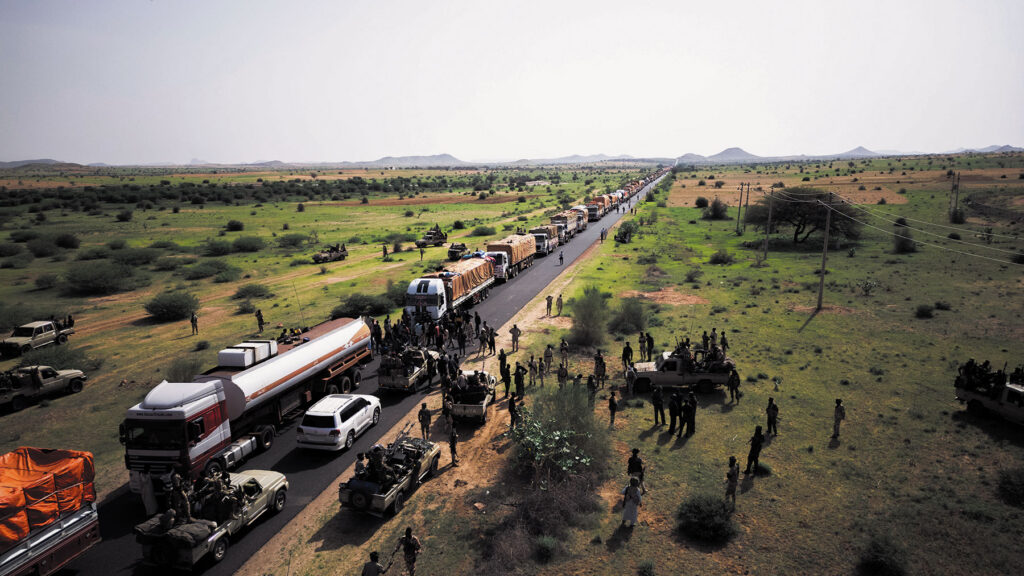
It was May 2023, and Mohamed Zakaria and his brother were on the run. The Rapid Support Forces (RSF), the paramilitary organization in conflict with the Sudanese Armed Forces (SAF), was closing in, and the two fled to take shelter at their aunt’s house in El Fasher, a city in the west of Sudan and the capital of North Darfur State. Despite the city being a warzone, Zakaria and around 20 neighbors had managed to take shelter — until a shell struck their aunt’s home. The attack killed four neighbors from within the home instantly and injured many others, including Zakaria and his brother. But surrounded by chaos as the walls collapsed around them, the brothers began to carry the wounded out of the area in search of safety.
That’s when the second and third shells hit. Zakaria says he doesn’t remember much from that second impact, just that he found a picture on his phone that he had taken while fleeing the scene in the back of a truck. He remembers that he was bleeding profusely, slipping in and out of consciousness. But he continued to take photos, capturing a doctor removing the shrapnel from his body on his camera. The experience utterly shifted his views on the crisis in Sudan.
“The doctor wiped my blood and said, ‘There are 16 shrapnel pieces in your body…I removed seven; the rest we’ll leave to time.’ In that moment, I understood that war doesn’t end when you leave the battlefield. Some of it stays lodged in your flesh, a daily reminder that survival isn’t the end of the battle. It’s just a new kind of fight where you learn to live with a body that’s become an archive of bullets,” Zakaria wrote in a photo essay titled “The Siege of El Fasher.” His photos documented a crowded emergency room, his X-rays, and his wounds. Published on his site, it serves as a kind of day-in-the-life snapshot of a civilian covering the streets of El Fasher over multiple days during the war. The photos bear witness to the devastation on the streets of the city: demolished cars, empty streets, and wounded civilians. It also features quotes from various photojournalists, along with Zakaria’s own story of escaping the city to neighbouring Chad with his mother and brother, only to return briefly before eventually leaving for Uganda.
The Siege of El Fasher marked a massive escalation in a complicated, multifaceted conflict sparked by tensions between The SAF, the state’s official military, and the RSF, a paramilitary group that emerged in 2013 from the Arab nomadic Janjaweed militia. The conflict is officially classified a civil war, however, actions taken by the RSF and their predecessors in the Janaweed Militia point to an ethnic cleansing targeting Sudan’s Black, non-Arab population and subjecting them to extreme violence, rape, and murder.
Despite the United Nations’ failure to conclude that there was a genocide occuring during its investigation of the conflict, former U.S. Secretary of State Anthony Blinken came to the conclusion on January 7, 2025 that the conflict should be designated as a genocide. In a press statement issued by the U.S Department of State, Blinken said, “The RSF and allied militias have systematically murdered men and boys — even infants — on an ethnic basis, and deliberately targeted women and girls from certain ethnic groups for rape and other forms of brutal sexual violence…. Based on this information, I have now concluded that members of the RSF and allied militias have committed genocide in Sudan.” The Siege of El Fasher in particular was a turning point, reshaping western Sudan. As reported by BBC and other outlets, as of October 2025, the RSF has taken control of the urban centre which was once a stronghold of the SAF and their allies. This came after approximately 18 months of consistent siege and the displacement of millions of people.
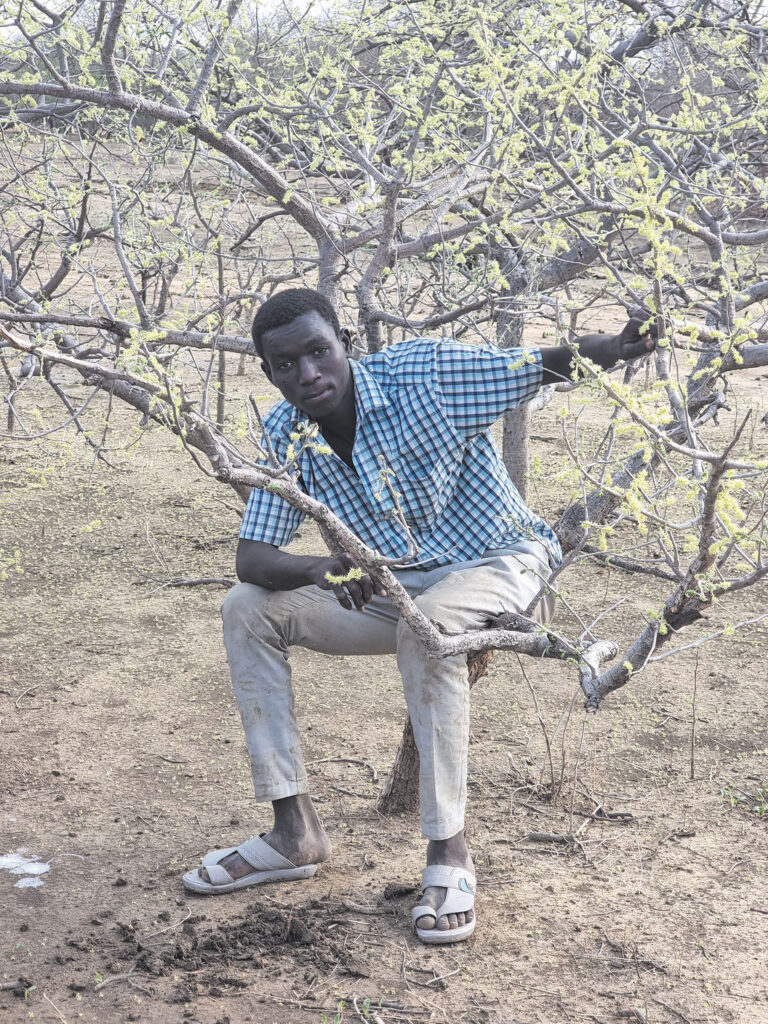
The displacement of Sudanese civilians in masses has only been exacerbated by the near total collapse of Sudan’s own media infrastructure. Based on data provided by the Sudanese Journalists Syndicate, a report by Free Press Unlimited notes that 80 percent of all 18 Sudanese states have been cut off from internet and communications networks, and a whopping 90 percent of media infrastructure has been destroyed. Leima Eljali Abubakr, a member of the recently established Sudan Media Forum, shared her perspective as a journalist living in exile in an interview with the United Nations Educational, Scientific and Cultural Organization (UNESCO).
“Since the outbreak of war in Sudan on April 15, 2023, journalists and media institutions have become direct targets of the warring factions,” she said. “Newsrooms have been ransacked, media equipment destroyed or looted, and press freedom has come under relentless attack. Journalists face life-threatening dangers daily, including death, persecution, threats, arbitrary arrest, torture, and enforced disappearance.”
***
Husam Mahjoub, a Sudanese journalist and telecommunications professional, is the co-founder of a satellite TV broadcast channel called Sudan Bukra TV, established in 2015. The idea for the channel was formed in 2013, in the wake of peaceful mass protests that were met with violence and brute force under Sudan’s former authoritarian president, Omar al-Bashir. Mahjoub and his partners developed Sudan Bukra TV with volunteers across Sudan in an attempt to continue producing the news — despite the social media and internet blackouts that characterized the later years of al-Bashir’s government and continued after his tenure. “We were under no illusion that we would be [able to compete] with the BBC or CNN or Al Jazeera or the other channels,” he says. “We had very limited resources…[and] relied on volunteers who were in Sudan and other countries outside Sudan,” says Mahjoub. Calling it a guerrilla TV channel, he says “it truly represents the people” from the people, to the people, and for the people.”
But as small an outfit as Sudan Bukra TV is, it was soon in the crosshairs of competing powers after being raided in their office in Omdurman, a city in Sudan. “Our offices were raided like two or three days after the war started in Khartoum. Many of our reporters had to flee. We had one correspondent, unfortunately, who was killed in Khartoum with the guns of the Rapid Support Forces.”
Mahjoub’s work reached a lot of people and for a time, Sudan Bukra TV was up and running. However, shortly after the war broke out in April of 2023, his broadcast went silent. “We stopped the [satellite] broadcasting. We could not find the money or enough resources to continue.” But he and his team are still thinking of ways to do it. “We can do an online thing and this is something we’re still discussing, but it will defeat the purpose of having something that can withstand internet [and] mobile network shutdowns,” he says.
The duty to report, a kind of moral obligation, drives some individuals into journalistic roles they have not previously occupied, or had even imagined for themselves. People sometimes find themselves in a position to either commit acts of journalism or fully embrace the role of a storyteller when confronted with horrors. They might have been witness to police brutality, or the horrors of residential schools, or experienced the collapse of the entire media infrastructure around them. In 2020, 17-year-old Darnella Frazier was walking along a street in Minneapolis when she bore witness to the police murder, by suffocation, of George Floyd. In a snap decision, she turned her camera on and created a recording that became an instrumental part of the public record. For this act, she earned a Pulitzer citation.
Bisan Owda, a Palestinian filmmaker, has spent nearly three years documenting the genocide in Gaza, while actively living it. For this, she has been recognized by the Emmy Awards and various journalism organizations, like the Peabody Awards. Zakaria was thrust into conflict and genocide, turning to journalism as a way to tell his people’s story. Mahjoub, too, felt this pull. Rosemary Georgeson, an Indigenous storyteller and playwright, seeks to correct the narrative about Indigenous women and people as a whole and share stories from her family about the cultural genocide through state apparatus like the residential school system. All of these individuals share the same motivation for committing these acts of journalism — they’re actively living the story. What connects these storytellers is the knowledge that the institutional infrastructure of big media may not do the work, and in their failing, the duty to report becomes that moral obligation.
In the place of bigger institutions, independent media organizations like the Sudan Media Forum or the South Kordofan–based publication Nuba Reports have been actively covering the genocide. They have adapted transparent, boots-on-the-ground reporting methods to ensure people’s voices and struggles are heard. Some journalists from Sudan, like Zakaria, now have to report from exile, unable to return to their home country.
Nuba Reports features a number counter on their home page labelled “bombs dropped on civilian targets since 2012.” As of writing, this number has reached 4,082. Despite the killings, the journalists continue to work. “There are some very, very promising or very courageous people and organizations that have been doing really remarkable work,” Mahjoub says of the people and projects that have managed to continue when Sudan Bukra TV could not.
“Sudanese regime, the military has inherited Omar al-Bashir’s tools of security, national security apparatus with its tools of [social and mainstream] media, PR machines, and influencers,” Mahjoub says. He says this has been the case for the past 30-plus years of al-Bashir’s reign. “But there is a resurfacing and kind of evolution for the media scene that is affiliated with the army, including the use of social media and a lot of social media influencers. So a major front [for] the war is the media, the media front.”
“Since the outbreak of war in Sudan on April 15, 2023, journalists and media institutions have become direct targets of the warring factions. Newsrooms have been ransacked, media equipment destroyed or looted, and press freedom has come under relentless attack.”
Zakaria experienced the blackout of the internet and cell service during The Siege of El Fasher firsthand, and the desperation faced when you lose connection to the world. He reflects on this in his photo essay. “Hundreds of El Fasher residents gathered around the city’s only Starlink site after months of network disruption,” he writes. “People raised their devices toward the sky as if voting for survival,” he continues. “One message everyone tried to send: ‘We are still here.’… Technology considered a luxury elsewhere became a matter of life or death in El Fasher.”
Zakaria is a freelance photojournalist, with a particular focus on the Darfur region and the ongoing genocide in Sudan. He’s had work published in a variety of outlets, including BBC, Doctors Without Borders, among many others. He also posts both on his website and Instagram page. But he wasn’t always a journalist, and never intended to be one. Zakaria’s father died two years before the war and he was managing the family business. But on the first day of the war, he decided he picked his camera back up.
“We were hit by a shell in [my aunt’s] house and I was injured and my little brother was also injured, and we have, like, four [people from] our neighbourhood at that time in our house was killed by the shell…we all found ourselves trapped in a place [with] that the soldiers fighting around us and we don’t have nothing to do…just to be trying to be alive and hide.” It was at that time Zakaria decided “This is very very important to document.
When discussing his past goals, Zakaria told the Review that he initially wanted to focus on photography and documentary filmmaking. The bulk of his original work can be found at Dar Productions, dating from 2017. He describes this early work as an attempt to fill a gap in the media reflecting the reality of living in Darfur. Zakaria and his peers co-run Dar Productions, a media company, focused on arts, culture, and humanitarian work in Darfur. He says it started as a small operation; it was a Facebook page managed by a few friends with two small Canon cameras. But as the team discovered the power their cameras held in telling people’s stories, what started as an effort to produce Darfur-based entertainment eventually grew into something bigger. Now, working with the United Nations Children’s Fund (UNICEF), Save the Children, and The Goethe Institute, the company makes small documentaries about relief efforts and the human impact of war. Dar Productions also holds workshops to teach youth how to operate cameras and make their own films and help them start their own businesses. But when the conflict worsened and Zakaria saw the horrors of genocide firsthand, he decided he needed to
do more.
“I’m honest with my work and I have a message…. Before the war, I was not a journalist. I just entered journalism because of the war and because of what I saw,” says Zakaria. He adds, “I don’t work for money. I don’t love journalism. I love films, I love photography.” Utilizing Dar Productions and the newfound connections they made, he managed to start a new project, Darfur Voices. The project is ongoing, and aims to give Sudanese people an outlet to share their voices. Darfur Voices is run by Zakaria and his friends, as well as people he had previously trained in his workshops.
Zakaria’s foray into journalism is far from a rare occurrence. Other individuals like Owda, otherwise known as “wizard_bisan1” on Instagram, mirror his path into reporting. Starting as a documentary filmmaker and social media influencer, Owda promptly began reporting on the genocide in Gaza when she found herself trapped and confronted with the death of her people and the destruction of her home. “I had no budget, no time, no energy, no camera, just conviction. But I knew I was archiving Gaza’s memory: its nature, food, history, and heritage. I was proving Gaza is on the map as one of the oldest cities on Earth, even if the world refuses to give it that place,” Owda says in an interview with Dazed MENA, the Dubai branch of publishing company Dazed Media.
Owda prefers to be referred to as a hakawati, or storyteller. Using her experience in content creation, she leveraged her skills to effectively amass a huge online following, boasting five million followers on Instagram at the time of writing. She has also established herself as a reliable source on the day-to-day survival of Palestinian people to more widely recognized publications, like Al Jazeera. In a May 2025 video interview she did with Al Jazeera English, she talks about the famine and food shortage caused by the Israeli government.
“I am having one meal a day [for] like two weeks, because of the Israeli prevention of any food to enter Gaza for 77 days now. And just imagine the doctors, and nurses, and the civil defence, all the emergency response workers living with this. They’re overwhelmed. We’re so tired, we don’t have enough nutrition, our families are displaced, we’re facing all of this with our empty hands,” says Owda.
***
The case can be made that reporters like Owda or Zakaria, freelance journalists using social media and the internet to report on these stories, aren’t “professional” journalists or that they aren’t “objective” enough. Pacinthe Mattar, an Egyptian-Canadian journalist based in Toronto, has questioned the centring of objectivity as a conceptual foundation of journalistic practice, an assessment based on years of working at CBC, the country’s public broadcaster. Since publishing her award-winning critique in The Walrus titled “Objectivity Is a Privilege Afforded to White Journalists,” Mattar has been on speaking tours and public lectures discussing this issue. She is currently a freelance reporter, using her independence to continue to push back against the notion of objectivity. In a phone conversation, Mattar tells the Review that the lived experience of a reporter and their sources is vital to our reporting. As a racialized journalist, Mattar illustrates her inability to separate her identity from her reporting. “I feel like by forcing journalists to believe in this notion of objectivity, I think we are ignoring the very real thing that none of us [are] objective. All of us come with our lived experience, but objectivity has been allowed to get away with the myth of it, because it has largely just been a shorthand for a liberal, middle-upper class, white lens. And that’s what passes as objective. You only really come into trouble with objectivity when you begin pushing back against that worldview, as simple as, I mean, in my case, just questioning police narratives,” says Mattar. “The first two examples that I write about in my Walrus article was just the pushback on the police’s word, and suddenly, that was a potential problem.”
Walid Batrawi, a veteran Palestinian journalist with years of on-the-ground reporting under his belt, is no stranger to this feeling of being incapable of separating himself from his reporting, especially when discussing devastation within Palestine. Batrawi currently teaches at Toronto Metropolitan University and is a member of the International Consortium of Investigative Journalists (ICIJ).
There is a disconnect between impartiality and objectivity, he tells the Review, citing an audio package he made for BBC about the honour killings of women in Palestine. He talks about how even though he had his own personal views on the issue, he reported it by the book and made sure all sides were heard, all facts were verified, and everything he reported was factually true. “And this package that I did sat in the newsroom for about a week before they released it at the BBC, and they were discussing that exact thing: is it objective? And then they released it and they started using it as a training material … because this one in particular, followed the book, it was 100% according to the BBC guidelines.” Batrawi says, explaining how he managed to achieve the notion of “objectivity” in his package.
Yet, it was deeply personal for him, as his connection to Gaza was what fueled his drive to tell the story. “In Gaza, it’s you. You are the story. Your family is the story. Your house is a story, your displacement is a story. Your son is a story. Your colleagues are the story. You are not an expat who is just going there to cover it for a week and leave, you are a part of the story. This is a genocide that is taking place against your own people,” says Batrawi. “Would you expect a Canadian journalist to be objective when they see their family being killed?”
As a journalist, Mattar understands and critiques exactly this perception in the journalism industry. “I think we need to disabuse ourselves, quite frankly, of the notion that objectivity can ever be really and fairly applied in journalism, because I think it’s just been code for the status quo. And to me, there’s really no going back,” says Mattar. She acknowledges that people have been saying this “for years,” but she was trying to make it work. Now, she says, she’s seen too much. “There have been too many stories about how objectivity has been wielded to just shut down things that are actually factually true, verifiable, well, well-resourced, and well-supported by international organizations, but somehow it’s unobjective to use the word genocide? I refuse to invest in that notion anymore and I think we need to be prioritizing truth over objectivity at this point, because sometimes objectivity actually gets in the way of telling the very truth we’re out to tell.”
“I’m honest with my work and I have a message. Before the war, I was not a journalist. I just entered journalism because of the war and what I saw there in my city and in my country, Sudan. I don’t work for money. I don’t love journalism.”
In her article, she discusses a multitude of stories in which the “objective” approach hindered her work in ways she never expected, like receiving accounts of police mistreatment from two Black men in Baltimore, only to be questioned in the newsroom about the validity of their identities and whether police were consulted. She has also faced significant hurdles when attempting to report on Palestine, describing how an interview she had prepared with a journalist named Ahmed Shihab-Eldin was cut completely from a show she was guest producing for and she was never given a real reason why. This was a pivotal moment in her career and one in which she encountered “the Palestine exception” in reporting.
“I think we take for granted in, especially in places like North America and, let’s just say, Canada, that here we have a democratic and free press, that we have freedom of expression, and that we have safety for reporters,” Mattar says. “I think the Palestine exception kind of really pops that, or exposes that as not true.” According to the principles of objectivity in journalism, dubbing what is occurring in Palestine or Sudan, as genocide wouldn’t be upholding the neutrality necessary for good reporting. But as both Batrawi and Mattar have clearly stated, to remain neutral when it’s your home, your family, and your life at stake, the concept of journalistic objectivity begins to fall apart at the seams.
This was exactly what drove Zakaria to pick up his camera. “My message is that I need justice and equality for my people there…. We can’t be neutral between the killer and the killed…I am the killed one. They killed me. So I am telling my story and my brother’s story,” Zakaria says. “I deeply feel like I have a duty and that I need to do it. Because I open my TV and try to search, to find anything about us. But I failed to find anything. And also there are a lot of things happening. If you open your door in your neighborhood street, you will find civilians killed…so I just like to start moving from this feeling of duty…. I face dangers, I face a lot of things.” After that second shell wounded him, he spent 10 days in recovery. Then, as soon as he was able, body still riddled with wounds and covered in bandages, he grabbed his camera and began visiting hospitals and camps while the fighting was ongoing and bullets whizzed over his head.
A sense of injustice that fuels one to document is what motivated Darnella Frazier, a teenager at the time, to film the police brutality against, and subsequent murder of, George Floyd. “Although this wasn’t the first time I’ve seen a Black man get killed at the hands of the police, this is the first time I witnessed it happen in front of me. Right in front of my eyes, a few feet away, I didn’t know this man from a can of paint, but I knew his life mattered. I knew that he was in pain…. It changed me. It changed how I viewed life. It made me realize how dangerous it is to be Black in America,” Frazier wrote in a post on Instagram for the one year anniversary of Floyd’s killing. “Even though this was a traumatic life-changing experience for me, I’m proud of myself. If it weren’t for my video, the world wouldn’t have known the truth.”
At the moment of filming, Frazier did not identify as a journalist. But in making the split-second decision to document that horrific scene on her phone, she committed an “act of journalism” that wound up being one of the most important pieces of evidence in the subsequent court case against officer Derek Chauvin, who murdered Floyd. It also gave newsrooms and journalists the evidence they needed to centre police brutality and racism in their work.
Frazier’s motivation was simple. “It wasn’t right. He was suffering. He was in pain. I knew it was wrong. We all knew it was wrong,” she said in her testimony during Chauvin’s trial. Due to the nature of the footage and the courage Frazier had to stand up in the face of anti-Black violence, it was a break in the status quo. When these dire situations arise and demand extreme attention and care, it can be especially daunting for those who don’t have formal training in journalistic practice.
***
“In the beginning, I also was wondering, ‘I don’t have any experience in journalism, so how can I do this?’ But it came naturally,” Zakaria says. He found the transition from his media production to journalism to be awkward, but he naturally slipped into the role with time and work. But he also feels that, because of his lived experience, he is the right person to be speaking on what’s happening in Sudan. “It’s very good to make global awareness. And to reach a lot of people…but I think it’s also about the narrative. Because, yeah, I’m from Darfur. I think I have a deep understanding of the war in Darfur.”
Mattar also voiced concern that coverage of Sudan in western media lacks context, depth, and space. She says that when large, mainstream outlets report on Sudan, it’s “always reported on as the forgotten war.” Mattar adds that the audience misses out on the nuances because the story itself isn’t told fully. “It’s always just framed as something that we don’t talk about.”
This idea of a need for lived experience is not exclusive to traditional journalism, but it’s something that is actively sought out in other nonfiction storytelling media. Rosemary Georgeson, an Indigenous storyteller who identifies as a Coastal Salish and Sahtu Dene artist, uses her lived experiences to tell stories that would otherwise go unheard. She has been vocal about her life and her family members’ lives, including growing up on Galiano Island in British Columbia and being the child of a residential school survivor. She had just returned home to the island when we spoke. “There’s so many people in denial around the world. People deny that these things are going on,” she says. “But when you have the living proof of someone who witnessed it, that changes everything. I think it does. We’re out in B.C. here. We got that crazy politician woman who says residential schools didn’t exist. Blah, blah, blah. [CBC] did a propaganda film in the [mid] 1950s about how residential school was beneficial for us and how it was helping our people. There’s other stories. I’m the child of a residential school survivor. So, you know, I got to fight back. And if I don’t, I stand for nothing.”
While working as a storyteller-in-residence for the Vancouver Public Library, she rifled through archives around Victoria to find a paper trail of her grandfather’s family story. He was taken away from his mother when he was three years old. In the archive, she came across documentation filled with inaccuracies. The authorities had recorded that her grandfather’s sister died at the age of 15, when in reality, she wasn’t even a year old when she passed away. “This is what people see. They go to places like the archives to learn more about our history. And they miss so much,” she says. “Maybe I’m just trying to balance it out a bit by the way I tell story or share knowledge…a good storyteller knows that they can only speak the truth. And they can only speak the stories they’re given…. But that’s where you get to the real facts of the past and how we get to where we are now. You have to meet, talk, and speak with other people. Don’t take what you are given, say, on the 6 o’clock news or whatever as fact. You’re only getting a few lines.”
Georgeson’s work is a beautiful mix of her own stories, and collective stories she shares with others, like her project Women in Fish. In this piece she aims to show how fisherwomen like Georgeson herself, effectively feed their communities by fishing off the western coasts of Canada. Written by Marie Clements and performed by Georgeson and Mary Galloway, it highlights the lived realities of people overlooked and exploited by the booming fishing industry.
Mattar champions the idea of lived experience being a vital factor to telling these stories, and actively uses it in her own work. “I think lived experience by another name is expertise, but somehow I think lived experience gets kind of brushed aside as not real or not valuable,” she says. “But then when you say expertise, then that sounds very different…lived experience is a window into experiences that we are supposed to be covering. And I think we have a duty to listen to those who have that lived experience.”
“The Siege of El Fasher” serves as a window into the very heart of a genocide that has been actively affecting the lives of millions of people across Sudan. Zakaria has produced multiple collaborative and solo works. His work at Dar Productions and Darfur Voices equips others with cameras and journalistic knowledge to spread and amplify forgotten voices within Sudan.
Some of Zakaria’s Instagram posts also feature calls to action. He states that action must be taken by the Ugandan government, humanitarian organizations, and the Sudanese civil society. He writes that he needs to see change.
Zakaria, Owda, Georgeson, Mahjoub, and Frazier — these journalists and storytellers have themselves responded to a call to action of a different kind: a duty to report the stories of their people, their cultures, and their homes. As journalists disconnected from the epicentre of a crisis, we, too, have an obligation. We need to create space, or cede it to the people with firsthand experience (and expertise) with their communities and conflicts. Their calling is built on hope and purpose.
“I’d love to see my country live in peace,” says Zakaria. “And all of us go back to our country to work and rebuild what the war destroyed there. I’d love to see my family because from the beginning of this war we been in four different countries. My small family in the beginning of the war, we were in one house, but now we are in three or four different countries. So if this war doesn’t stop, I don’t know when I will [be together with] my family again.”