Despite long-standing systemic barriers, visual editors and graphic designers in journalism are working towards anti-racist illustrations
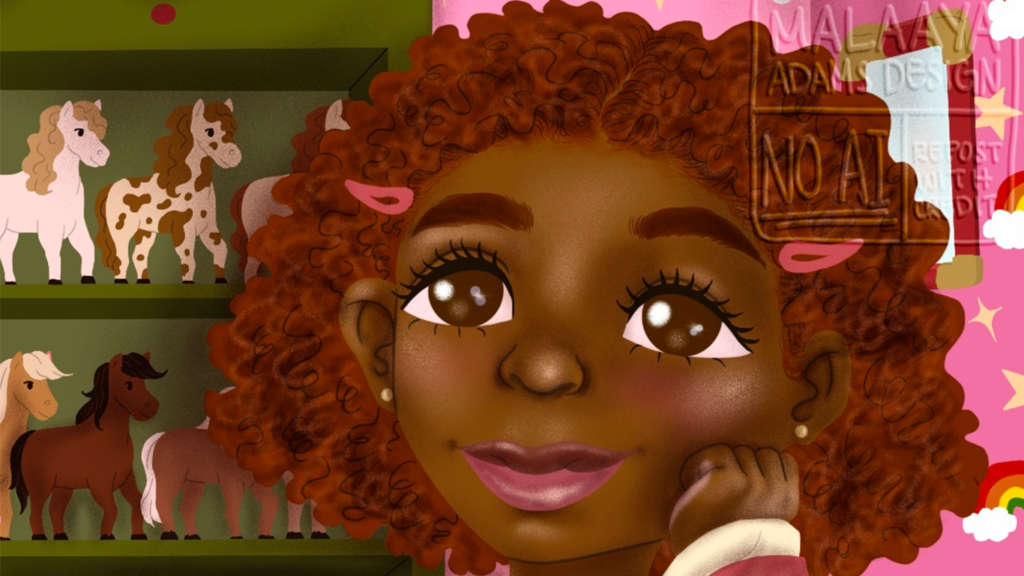
When Malaaya Adams was enrolled at Temple University for her BFA in graphic design she was only able to take one course that focused on illustration. The majority of her program was spent learning about branding. Adams describes her education as “white, male-dominated.”
But Adams ended up falling in love with her illustration class. As someone who values “woman-focused” work, she felt she had more freedom to express herself.
“Years later they adapted a program to be illustration and graphic design, so I was excited about that,” says Adams. “I just thought it was also important to focus on that audience because around 2015 to 2019, there weren’t a lot of Black women or women of colour [in the program].”
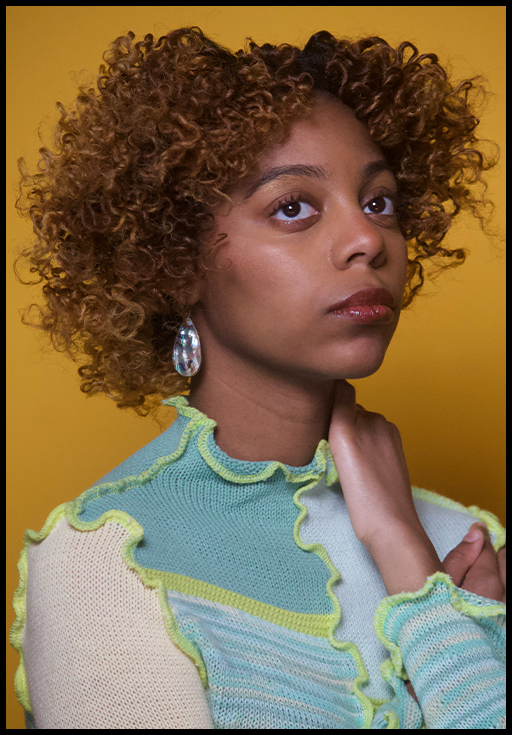
After graduating, Adams would go on to work for Vox and Toned, including illustrations for a piece about Black female athletes in Canada which she got thanks to the now-defunct networking platform, Women Who Draw.
Women Who Draw, a directory of women and gender non-conforming artists, was a networking platform for artists that emphasized diversi/ty and inclusion. It helped connect these artists with editors and publishers, but has since shuttered leaving a gap for journalists seeking diverse illustrators.
Chloë Ellingson, the recently-appointed visuals editor at The Local, finds some of her illustrators at Issues Magazine Shop at the store’s annual portfolio review.
“I want someone who understands the story, and that might be because they’ve worked on stories that are similar in nature subject-wise in their practice in the past, or it might be because of their lived experience,” she says on finding illustrators for The Local.
Ellingson’s ethics when it comes to sourcing talent stems from the reckoning that journalism has gone through over the last several years. For white editors like her, this means engaging with critical perspectives around how journalists have visually depicted marginalized communities.
“Capturing how things look fools us into thinking that we’ve captured their truth,” writes Nigerian-American photographer, Teju Cole, whose work has inspired Ellingson. “But appearance is bare fact. Combined with intuition, scrupulous context, and moral intelligence, it has the chance to become truth. Unalloyed, it is worse than nothing.”
One of the most contentious illustrations to grace the pages of a magazine in recent years is the New Yorker’s “A Mother’s Work” cover, illustrated by R. Kikuo Johnson. The illustration depicts two women of colour watching over a group of white children in a park. A multitude of conversations swiftly followed.
“The image also struck a nerve with many people of color who recalled their own parents and grandparents who worked as nannies missing special events because of their obligation to the families they worked for,” writes Angela Johnson for The Root.
Johnson’s cover would go on to win the Society of Illustrators’ gold medal.
Going back further, journalism has a long history of using racist imagery in its illustrations. And this is in no way a history that has been concluded. As part of the Jim Crow Museum’s mandate, the Michigan-based institution has archived anti-Black cartoons, with dates spanning from the early 20th century up until 2009.
After decades of BIPOC students advocating for change in programs, art schools have also gone through a reckoning. In a space where there is little to no instruction on non-white, non-European arts, students have had to fight for their work to be validated.
Nneka Myers is an illustrator and designer who has worked with Scholastic, Penguin Random House and Owl Kids, among others. When she attended Sheridan College for animation, she was unable to take any non-eurocentric art courses.
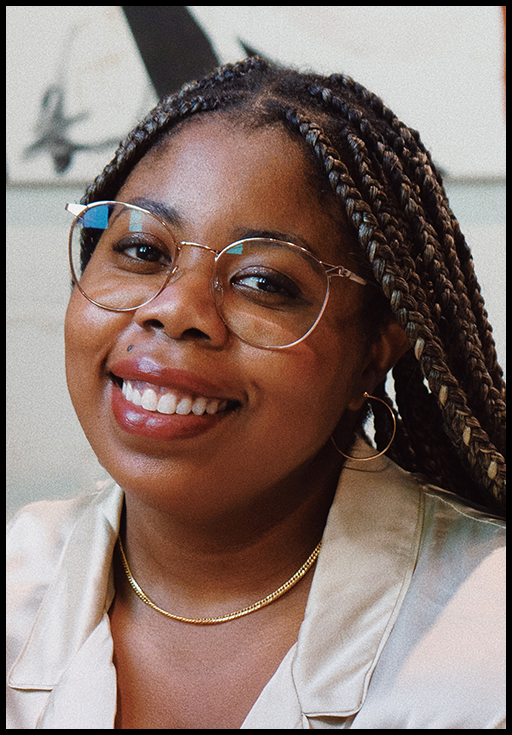
“We deserve to learn about the arts of all the cultures that have shaped our country, not just during a month of reflection or cultural festivities,” says Myers in an email. “I think the education system has a bad habit of making BIPOC feel like the ‘other’ in creative history when they define so much of what our country is today.”
Not only does this severely impact the health of Black and Brown students within these art institutions, but the lack of instruction impedes all artists in their depictions of BIPOC characters, spanning medical textbooks to, of course, journalism.
OCAD, Canada’s largest art and design school, only hired its first full-time Black staff member in 2016. When Ellingson attended Loyalist College they had no classes devoted to learning how to photograph diverse skin tones.
Broadview’s art director, Carol Moskot, has spent seven years working with illustrators for the magazine. Like Ellingson, Moskot feels it’s often important to find illustrators with lived experiences that parallel the stories they’re designing for.
This includes art like Aurélia Durand’s illustrations of Jesus for Broadview in 2021.
“I wanted to celebrate the idea and the concept of a Black Jesus and how it breaks through a lot of the visual clutter we have in terms of Jesus stereotypes,” says Moskot.
“We don’t really know what Jesus looks like, so why racial presentation matters kind of delves a little bit more deeply into the subject matter and how Jesus has been portrayed over the centuries.”
When drawing more subjects which have been faced with historical injustices, sensitivity consultants are brought in as part of the fact-checking process. Moskot used Romain Lasser’s depiction of Indigenous churchgoers for a 2023 story as an example.
“A sensitivity reader came back to us and had lots of feedback for us, which was great,” says Moskot. “For instance, the length of a braid, it had to be a certain length. The sage, what it should look like, how it should be wrapped. […] The ribbon skirt and being really specific as to how that looks.”
Ultimately, Myers says that journalists should trust in the artists they hire, especially those working in a culture-based context.
“Give the artist the idea, highlight the one important feature, and give them room to interpret what’s visually possible to represent the provided copy,” writes Myers.
Fact-checking, educational reforms and trusting in illustrators with lived experience are all important milestones on the way to more equitable depictions, even if there is still lots of work for newsrooms back at the drawing board.
About the author
